
Research workflow
From knowledge to synthesis and process design.
Turn internal experimental data, papers, and patents into usable knowledge. Select promising synthesis routes from diverse candidates, check reaction feasibility, and develop a conceptual process design covering process steps and reaction conditions.
Knowledge & database creation AI
Convert internal experimental data, papers, patents, and other sources into organized knowledge that can be put to use.
Use: internal experimental data, papers, and patents
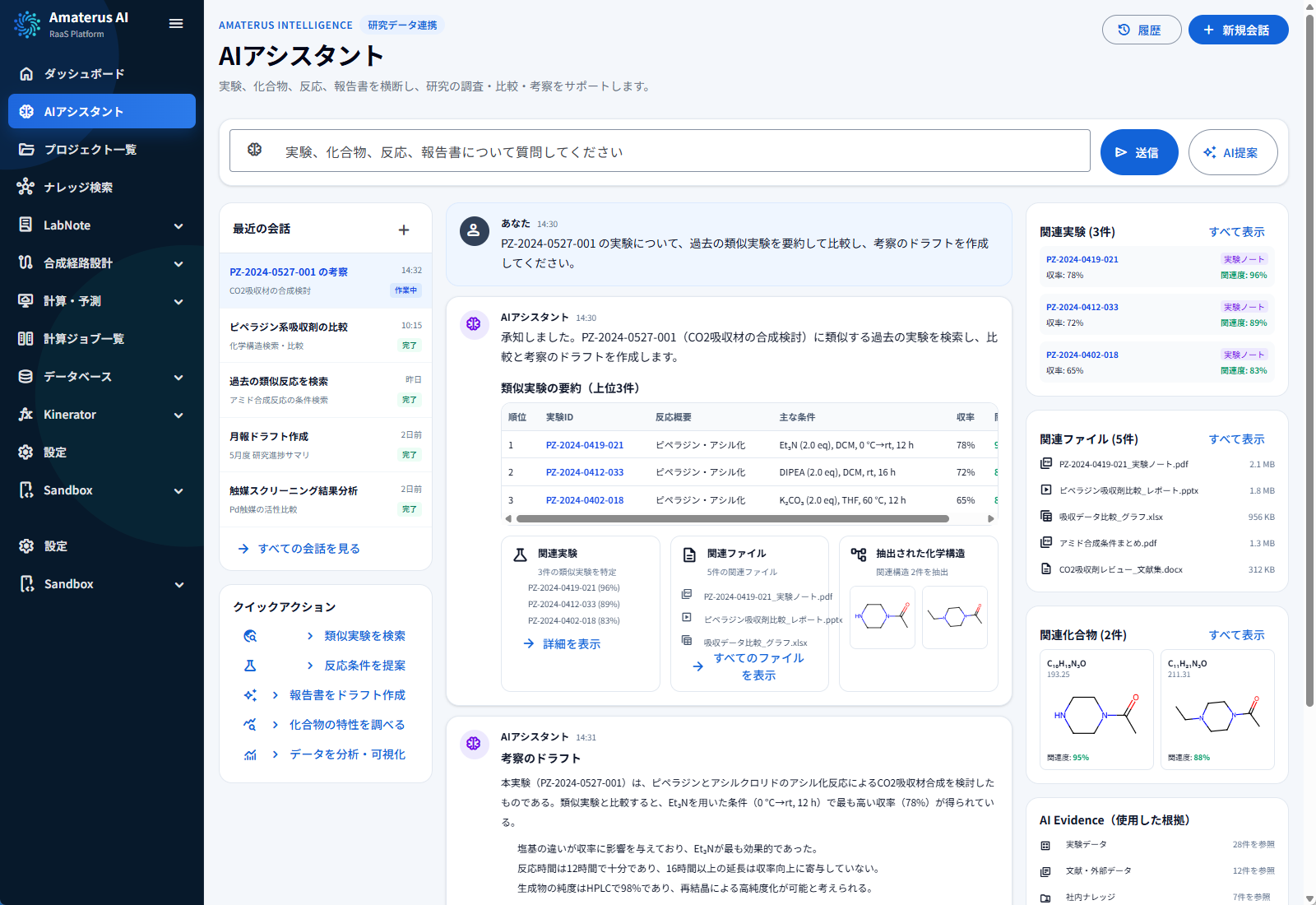
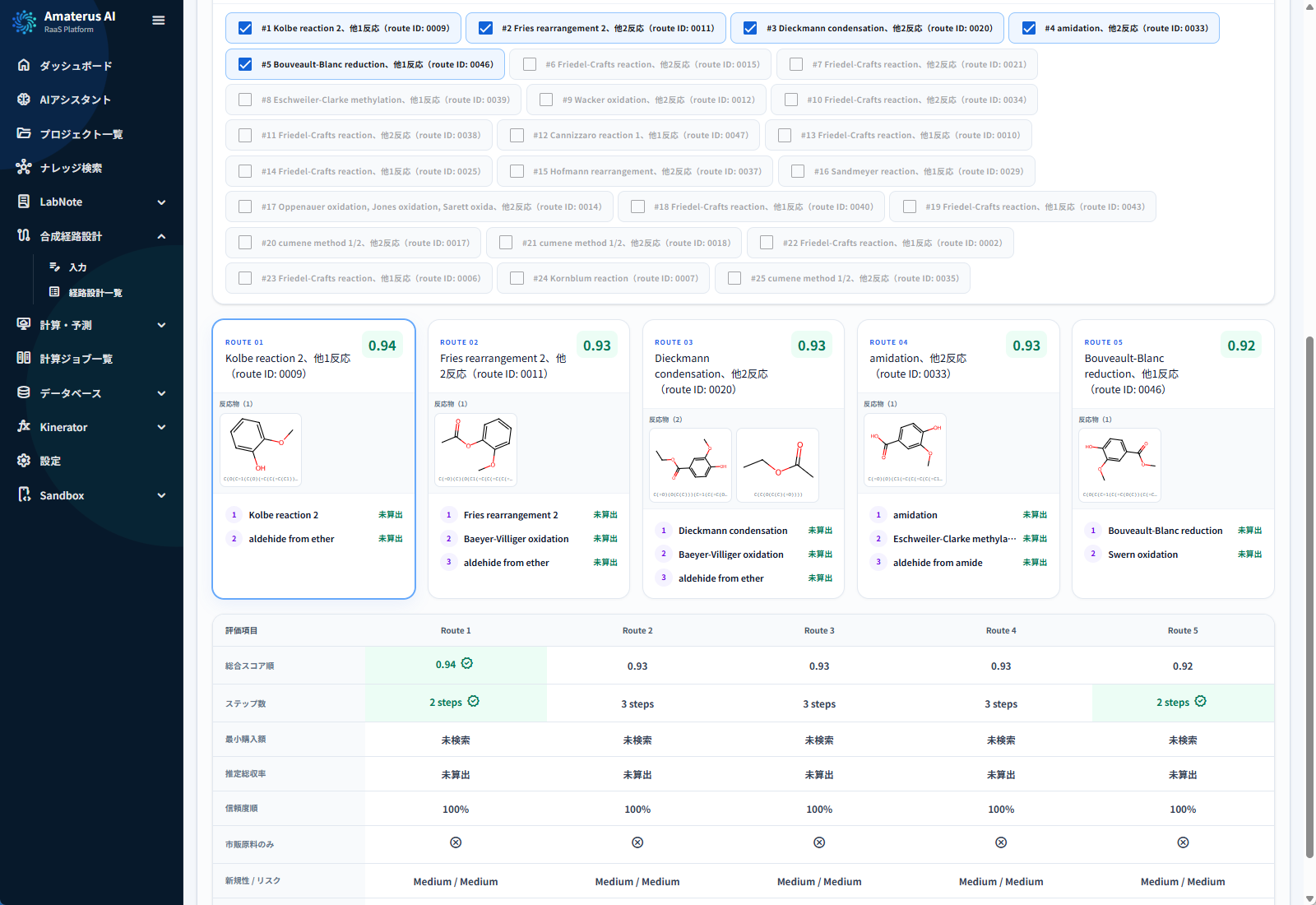
Synthesis route exploration AI
Multiple route exploration AIs generate diverse candidates, and consensus AI selects promising synthesis routes.
Select: promising synthesis routes from diverse candidates
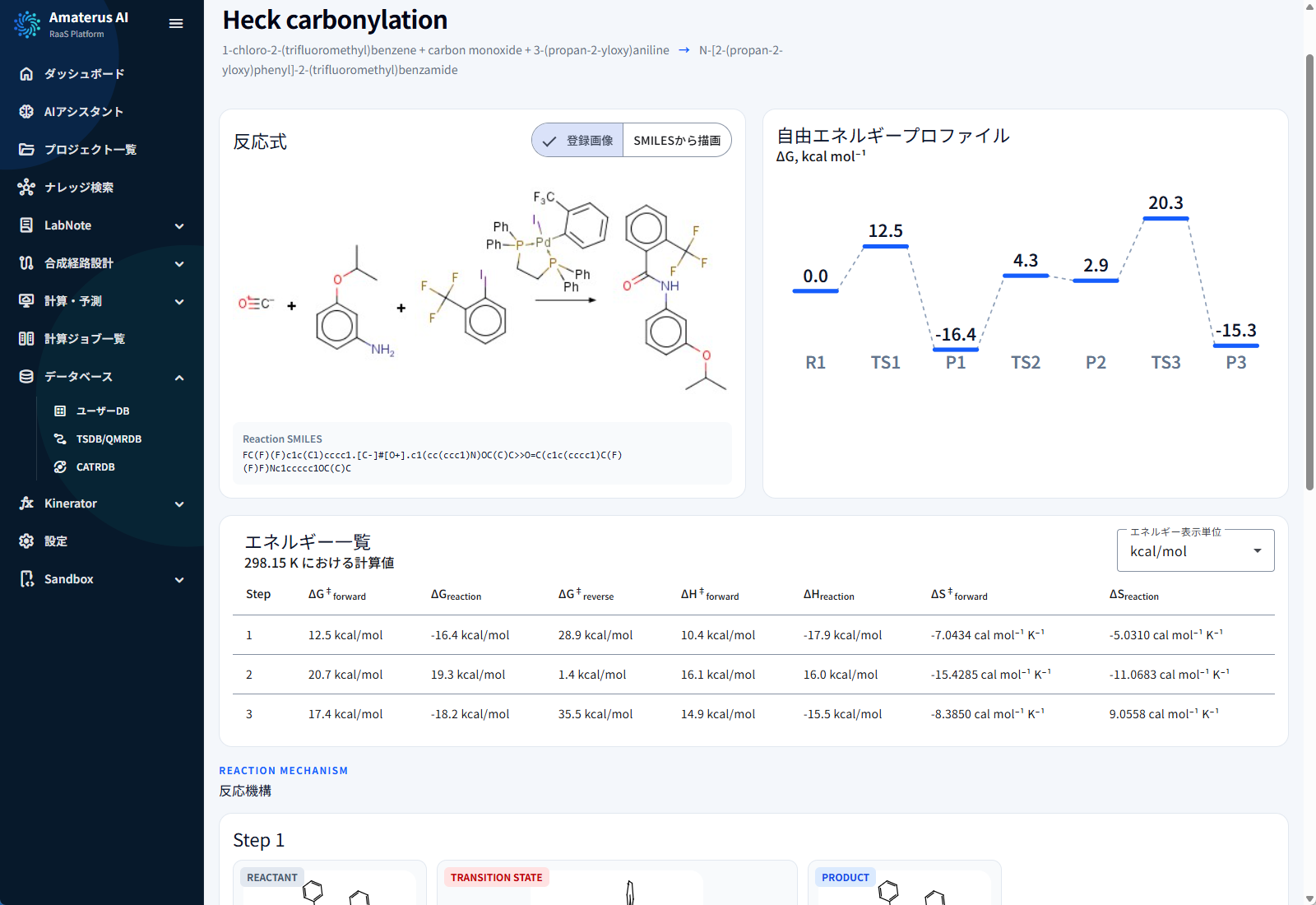
Reaction prediction & validation AI
Check reaction feasibility in advance using data and quantum chemistry calculations.
Check: feasibility using data and quantum chemistry calculations
Conceptual process design AI
Develop a conceptual process design, including process steps and reaction conditions, based on the synthesis route.
Conceptual design: process steps and reaction conditions based on the route
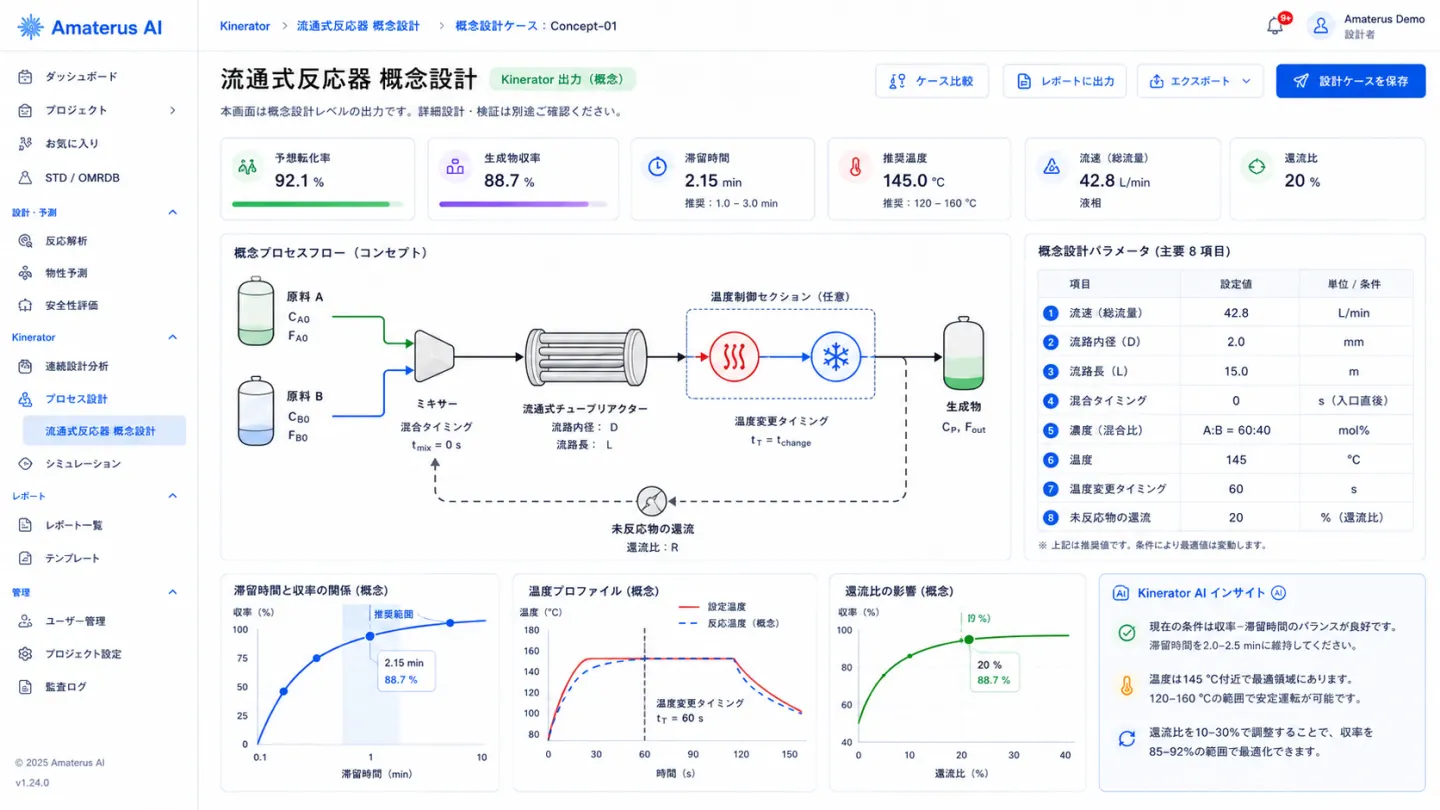
Conceptual process design example (Kinerator)
Review the exploration, validation, and conceptual design results as a research team and use them to plan the next experiments and investigations. Organize new experimental data as knowledge for subsequent R&D.
Explore plans & pricingNext step
Use chemistry AI for your next R&D task.
Tell us about the work you want to address: knowledge creation, route exploration, reaction validation, or conceptual process design. We’ll review your goals and data requirements, then discuss implementation options that fit your team.